
Wages in Korea
Legal Structure and Employer Responsibilities
Overview of Wage Structure in Korea
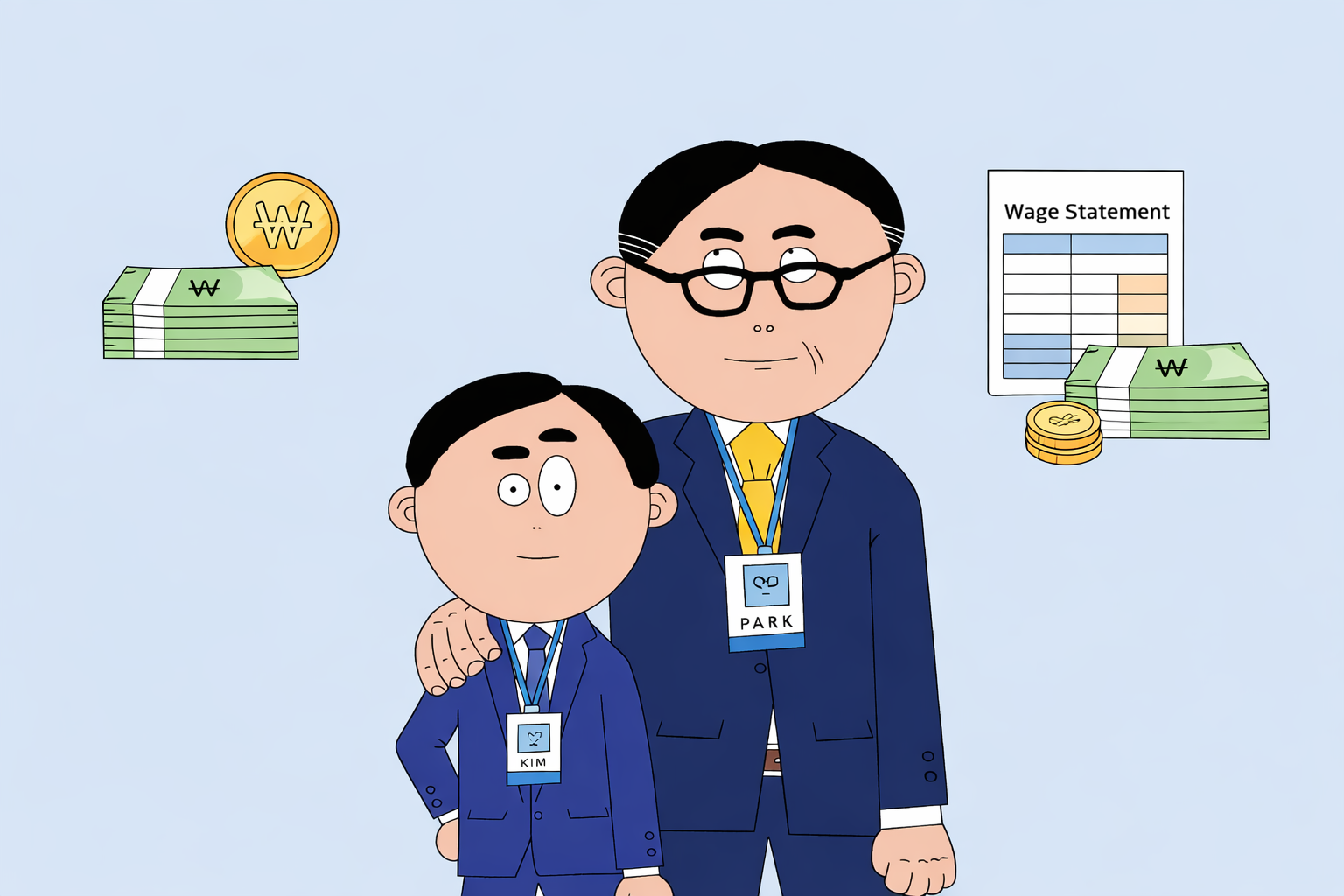
Wages (임금) under the Labor Standards Act refer to all monetary payments made by an employer to an employee in return for work, regardless of their name or designation.
Wage structures in Korean companies vary widely from one employer to another. However, the basic framework is generally the same. Employees receive a base wage, which is the payment for their contractual working hours, and statutory allowances that must be paid when work is performed beyond those hours – such as overtime, night work, holiday work, and unused annual leave payments. Many companies also offer various bonuses and incentives. In addition to these basic elements, some companies offer additional allowances based on their internal policies and business needs. These may include position allowances, job-related allowances, qualification allowances, family allowances, length-of-service allowances, meal allowances, and other similar payments.
Under the Labor Standards Act, employers must pay wages at least once a month. Most companies in Korea pay wages on a monthly basis.
Key Wage Concepts Under Korean Labor Law
To calculate wages, it is essential to understand two legal concepts: Ordinary Wage and Average Wage.
• Ordinary Wage
The ordinary wage represents the value of an employee’s contractual working hours. It serves as the basis for calculating statutory allowances – such as overtime, night work, holiday work allowances, and unused annual leave allowance. It is typically calculated in the form of an hourly rate.
To be classified as an ordinary wage, a payment must (1) be compensation for contractual working hours, (2) be paid regularly and (3) be paid uniformly. “Regularly” means the payment is made on a fixed cycle, even if the cycle is longer than one month. “Uniformly” means the payment is made to all employees, or to all employees who satisfy certain work-related conditions or criteria.
Bonuses and incentives may qualify as ordinary wage if they are paid regularly and uniformly. However, if the amount varies based on actual performance or evaluation results, it is not considered compensation for contractual working hours and therefore does not fall under ordinary wage.
• Average Wage
The average wage is used as the basis for calculating various statutory benefits, including severance pay, unemployment benefits, and industrial accident compensation. It is calculated by dividing the total wages paid during the preceding 3 months by the total number of calendar days in that period (typically 89-92 days). In other words, it represents the employee’s average daily earnings based on actual work performed and wages received.
All forms of wages that constitute payment for work must be included in the average wage calculation – not only ordinary wages but also statutory allowances and various types of bonuses and incentives, if they constitute wages.
Principles of Wage Payment
Under the Labor Standards Act, wages must be paid in currency, directly to the employee, in full, and on a regular payday. Wages must be paid in Korean legal tender, and payment must be made into the employee’s own bank account. Because wages must be paid in full, no deductions may be made from an employee’s wages unless they are expressly permitted by law – such as taxes and social insurance contributions. Accordingly, even if an employer has a claim for damages arising from an employee’s wrongful act or any other liability, the employer cannot unilaterally offset such claims against the employee’s wage entitlements. Doing so may constitute a criminal offense.
Criminal Penalties for Wage Non-Payment
Employers must pay wages on a regular payday at least once a month, and when employment ends, all outstanding wages and benefits must be settled within 14 days (this period may be extended by mutual agreement). Failure to comply may result in imprisonment for up to 3 years or a fine of up to KRW 30 million. The criminal statute of limitations for this offence is 5 years.
Statute of Limitations for Wage Claims
Under the Labor Standards Act, an employee’s claim for unpaid wages expires if it is not exercised within 3 years. However, the limitation period may be interrupted by legal actions such as filing a lawsuit.
Wage Increases
Korean law does not impose any general obligation on employers to increase wages. As long as a company complies with the government-announced minimum wage each year, it is not legally obliged to increase wages even when the cost of living rises. Wage increases may be set through individual negotiations, determined under internal rules, or, in the absence of specific rules or agreements, decided by the employer. In companies with a labor union, wage increases are typically determined through annual collective bargaining, and the resulting wage rates apply to employees. When any wage-related terms are changed, the employer must issue written notice of the changes or sign an updated contract.
Statutory Allowances and the Comprehensive Wage System (포괄임금제도)
Under the Labor Standards Act, employers are required to pay statutory allowances at premium rates for overtime work (work exceeding 8 hours per day or 40 hours per week), holiday work (work performed on holidays), and night work (work performed between 10 pm and 6 am). These statutory allowances must be calculated and paid based on the actual number of hours worked.
The “comprehensive wage system” is a pay structure in which statutory allowances are deemed to be already included in the base salary, or are paid as a fixed amount regardless of the actual hours worked. This type of wage arrangement effectively undermines the statutory rules on wages and working hours. Although courts have recognized its validity in extremely limited and exceptional circumstances, it is generally invalid in principle, even if the parties include such terms in an employment contract.
Employer Takeaways
Wage obligations are strictly enforced in Korea, and non-compliance may lead to both civil and criminal liability. To minimize legal and operational risk, employers should ensure that their wage structure and statutory payments comply fully with Korean labor law.
If you have any questions about your wage structure or compliance obligations under Korean labor law, please feel free to contact us.
Legal Structure and Employer Responsibilities
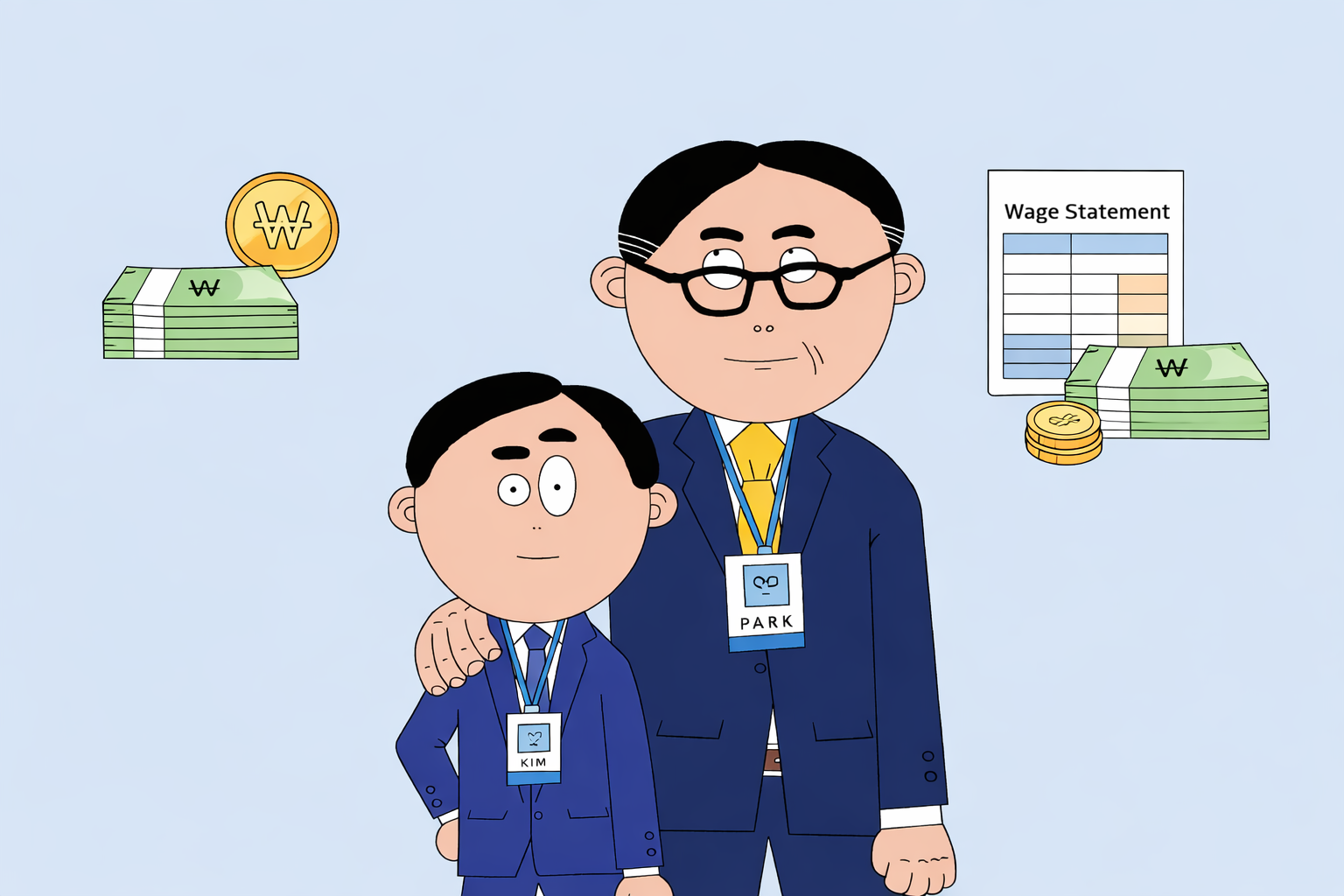
Wages (임금) under the Labor Standards Act refer to all monetary payments made by an employer to an employee in return for work, regardless of their name or designation.
Wage structures in Korean companies vary widely from one employer to another. However, the basic framework is generally the same. Employees receive a base wage, which is the payment for their contractual working hours, and statutory allowances that must be paid when work is performed beyond those hours – such as overtime, night work, holiday work, and unused annual leave payments. Many companies also offer various bonuses and incentives. In addition to these basic elements, some companies offer additional allowances based on their internal policies and business needs. These may include position allowances, job-related allowances, qualification allowances, family allowances, length-of-service allowances, meal allowances, and other similar payments.
Under the Labor Standards Act, employers must pay wages at least once a month. Most companies in Korea pay wages on a monthly basis.
To calculate wages, it is essential to understand two legal concepts: Ordinary Wage and Average Wage.
The ordinary wage represents the value of an employee’s contractual working hours. It serves as the basis for calculating statutory allowances – such as overtime, night work, holiday work allowances, and unused annual leave allowance. It is typically calculated in the form of an hourly rate.
To be classified as an ordinary wage, a payment must (1) be compensation for contractual working hours, (2) be paid regularly and (3) be paid uniformly. “Regularly” means the payment is made on a fixed cycle, even if the cycle is longer than one month. “Uniformly” means the payment is made to all employees, or to all employees who satisfy certain work-related conditions or criteria.
Bonuses and incentives may qualify as ordinary wage if they are paid regularly and uniformly. However, if the amount varies based on actual performance or evaluation results, it is not considered compensation for contractual working hours and therefore does not fall under ordinary wage.
The average wage is used as the basis for calculating various statutory benefits, including severance pay, unemployment benefits, and industrial accident compensation. It is calculated by dividing the total wages paid during the preceding 3 months by the total number of calendar days in that period (typically 89-92 days). In other words, it represents the employee’s average daily earnings based on actual work performed and wages received.
All forms of wages that constitute payment for work must be included in the average wage calculation – not only ordinary wages but also statutory allowances and various types of bonuses and incentives, if they constitute wages.
Under the Labor Standards Act, wages must be paid in currency, directly to the employee, in full, and on a regular payday. Wages must be paid in Korean legal tender, and payment must be made into the employee’s own bank account. Because wages must be paid in full, no deductions may be made from an employee’s wages unless they are expressly permitted by law – such as taxes and social insurance contributions. Accordingly, even if an employer has a claim for damages arising from an employee’s wrongful act or any other liability, the employer cannot unilaterally offset such claims against the employee’s wage entitlements. Doing so may constitute a criminal offense.
Employers must pay wages on a regular payday at least once a month, and when employment ends, all outstanding wages and benefits must be settled within 14 days (this period may be extended by mutual agreement). Failure to comply may result in imprisonment for up to 3 years or a fine of up to KRW 30 million. The criminal statute of limitations for this offence is 5 years.
Under the Labor Standards Act, an employee’s claim for unpaid wages expires if it is not exercised within 3 years. However, the limitation period may be interrupted by legal actions such as filing a lawsuit.
Korean law does not impose any general obligation on employers to increase wages. As long as a company complies with the government-announced minimum wage each year, it is not legally obliged to increase wages even when the cost of living rises. Wage increases may be set through individual negotiations, determined under internal rules, or, in the absence of specific rules or agreements, decided by the employer. In companies with a labor union, wage increases are typically determined through annual collective bargaining, and the resulting wage rates apply to employees. When any wage-related terms are changed, the employer must issue written notice of the changes or sign an updated contract.
Under the Labor Standards Act, employers are required to pay statutory allowances at premium rates for overtime work (work exceeding 8 hours per day or 40 hours per week), holiday work (work performed on holidays), and night work (work performed between 10 pm and 6 am). These statutory allowances must be calculated and paid based on the actual number of hours worked.
The “comprehensive wage system” is a pay structure in which statutory allowances are deemed to be already included in the base salary, or are paid as a fixed amount regardless of the actual hours worked. This type of wage arrangement effectively undermines the statutory rules on wages and working hours. Although courts have recognized its validity in extremely limited and exceptional circumstances, it is generally invalid in principle, even if the parties include such terms in an employment contract.
Wage obligations are strictly enforced in Korea, and non-compliance may lead to both civil and criminal liability. To minimize legal and operational risk, employers should ensure that their wage structure and statutory payments comply fully with Korean labor law.
If you have any questions about your wage structure or compliance obligations under Korean labor law, please feel free to contact us.

