
Employer Interference with Union Activities?
Take Proactive Action Against Unfair Labor Practices
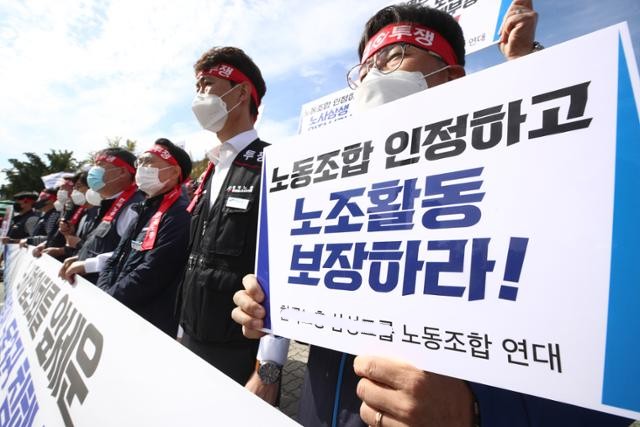
What Are Unfair Labor Practices?
Constitutional Rights Workers Must Be Free to Exercise
Unfair labor practices refer to employer conduct that infringes upon the three fundamental labor rights guaranteed by the Constitution — namely, the rights to organize, to bargain collectively, and to take collective action — thereby undermining the order of labor-management relations. The Trade Union and Labor Relations Adjustment Act (“Trade Union Act”) strictly prohibits such practices.
If an employer engages in an unfair labor practice, criminal sanctions may be imposed on the responsible individual, and fines may also be levied against the corporation or the employer personally under the dual liability principle. In recent years, a senior executive of a major Korean corporation was sentenced to one year of imprisonment for engaging in union-busting activities.
The Four Major Types of Unfair Labor Practices
Unfair labor practices are generally categorized into four major types:
• Discriminatory Treatment for Union Activity
This includes cases where an employer disadvantages an employee because of lawful union activities, such as joining or attempting to join a union, organizing a union, or otherwise engaging in union activities. Retaliatory measures — for example, adverse action taken because the employee reported legal violations to the Labor Relations Commission, testified in related proceedings, or submitted evidence to an administrative authority — also fall within this category.
• Unfair Employment Contracts (Yellow-Dog Contracts)
This refers to making it a condition of employment that an employee not join a trade union, withdraw from a union, or become a member of a specific union. Such terms are intended to suppress the employee’s freedom of association even before employment begins and are unlawful and void.
• Refusal or Neglect of Collective Bargaining
This includes conduct where the employer, without just cause, refuses or neglects to engage in collective bargaining with the union representative. While the duty to bargain requires good faith negotiations, it does not impose an obligation to reach an agreement.
Acts constituting unfair labor practices include repeatedly postponing bargaining without justification, unilaterally interrupting negotiations, refusing to bargain merely because the union’s demands are considered excessive, or avoiding bargaining on the grounds of managerial difficulties. However, refusal may be justified where the bargaining request lacks proper authority, is made at unreasonable times or locations, or involves violent or threatening conduct.
• Interference with or Domination of a Trade Union
This involves employer interference with or domination of the organization or operation of a trade union and is one of the most frequently disputed types of unfair labor practices.
Examples include obstructing union formation, inducing employees to withdraw from or join a specific union, providing benefits to influence union management, interfering with union activities or elections, unilaterally suspending previously granted facilities, intimidating union members, engaging in an unlawful lockout, or granting preferential treatment to a particular union. Providing wages beyond the time-off limit or subsidizing union expenses in a way that threatens union independence may also constitute an unfair labor practice.
Remedy for Unfair Labor Practices
• Administrative Remedies through the LRC
An employee or a trade union whose rights have been infringed due to an employer’s unfair labor practices may file an application for remedy with the Labor Relations Commission (LRC). The application must be filed within three months from the date on which the unfair labor practice occurred (or, in the case of a continuing act, from the date on which such act ceased).
Effect and Enforcement of Remedial Orders
If an unfair labor practice is found and a remedial order is issued, the effect of the order is not suspended even if an application for review or administrative litigation is filed. If an employer fails to comply with a remedial order issued by the LRC, the Commission may impose enforcement fines on the employer. Such fines may be imposed up to twice per year, for a maximum of four times in total, with each fine not exceeding KRW 30 million. (If the LRC’s decision is ultimately overturned, any enforcement fines already paid will be refunded.)
Criminal Sanctions for Non-Compliance
Additionally, if the employer fails to comply with a final and binding remedial order, the employer may, separately from any enforcement fines, be subject to criminal penalties of up to three years of imprisonment or a fine of up to 30 million won.
• Criminal Remedies
Filing with the Ministry of Employment and Labor
An employee or a trade union whose rights have been infringed due to an employer’s unfair labor practices may seek the punishment of the employer by filing a complaint, accusation, or criminal charge with the Ministry of Employment and Labor (MOEL). The statute of limitations is five years, and therefore such action must be taken within five years from the date on which the unfair labor practice occurred. This may be pursued concurrently with an application for remedy filed with the LRC.
Practical Approach of the MOEL
That said, in light of the particular nature of labor-management relations, the MOEL tends to operate and handle cases primarily through the LRC’s remedial procedures rather than criminal punishment. Accordingly, the MOEL generally waits for the initial decision of the LRC and handles the matter in a manner consistent with the outcome of that decision.
• Civil Remedies
If an employee is dismissed as a result of an unfair labor practice, the employee may file a lawsuit with the court seeking confirmation of the invalidity of the dismissal. In addition, if an employer refuses to comply with a remedial order issued by the LRC, or fails to take measures to restore the employee’s rights even after being subject to criminal punishment, the employee may claim damages for tortious acts before the court and obtain a judgment ordering performance.
Challenges in Recognition and Proof
The rate at which unfair labor practices are recognized is generally low, remaining at around 10%. One of the key reasons for this is the difficulty of establishing the employer’s intent behind the alleged unfair labor practice. Mere suspicion is insufficient; rather, the burden lies with the employee or the trade union to objectively prove the employer’s intent to engage in an unfair labor practice.
Proving Employer Intent in Practice
In practice, proving an unfair labor practice often depends on establishing the employer’s intent to oppose or undermine the trade union. The LRC applies a strict standard in determining whether such intent can be inferred. Accordingly, success typically requires securing comprehensive evidence — such as the timing of the employer’s actions, the history of labor-management relations, disparities in disciplinary measures between union members and non-members, consistency with past practices, and the employer’s statements or attitudes toward the union — from which such intent may reasonably be inferred.
Need Legal Assistance?
Employer conduct intended to weaken the union’s influence or discourage union activities should be addressed promptly. Even where it is not immediately clear whether such conduct constitutes an unfair labor practice under the law, it is important to take proactive steps — such as filing a complaint with the Ministry of Employment and Labor or an application for remedy with the Labor Relations Commission — in order to prevent further interference at an early stage.
Unfair labor practices occurring during collective bargaining or in the course of an industrial dispute, in particular, require a firm and timely response. If your union requires legal advice or representation in relation to such matters, please feel free to contact us.
Take Proactive Action Against Unfair Labor Practices
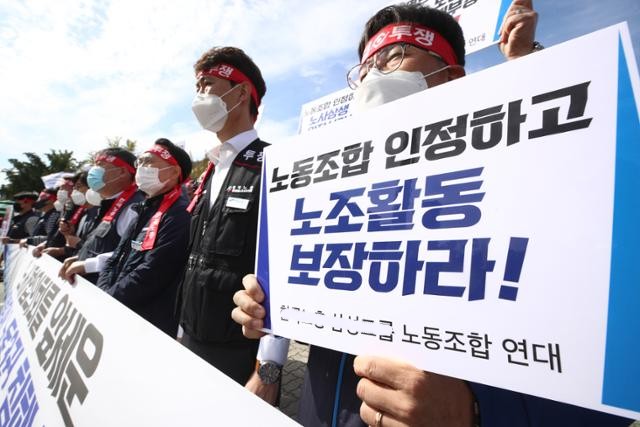
Constitutional Rights Workers Must Be Free to Exercise
Unfair labor practices refer to employer conduct that infringes upon the three fundamental labor rights guaranteed by the Constitution — namely, the rights to organize, to bargain collectively, and to take collective action — thereby undermining the order of labor-management relations. The Trade Union and Labor Relations Adjustment Act (“Trade Union Act”) strictly prohibits such practices.
If an employer engages in an unfair labor practice, criminal sanctions may be imposed on the responsible individual, and fines may also be levied against the corporation or the employer personally under the dual liability principle. In recent years, a senior executive of a major Korean corporation was sentenced to one year of imprisonment for engaging in union-busting activities.
Unfair labor practices are generally categorized into four major types:
This includes cases where an employer disadvantages an employee because of lawful union activities, such as joining or attempting to join a union, organizing a union, or otherwise engaging in union activities. Retaliatory measures — for example, adverse action taken because the employee reported legal violations to the Labor Relations Commission, testified in related proceedings, or submitted evidence to an administrative authority — also fall within this category.
This refers to making it a condition of employment that an employee not join a trade union, withdraw from a union, or become a member of a specific union. Such terms are intended to suppress the employee’s freedom of association even before employment begins and are unlawful and void.
This includes conduct where the employer, without just cause, refuses or neglects to engage in collective bargaining with the union representative. While the duty to bargain requires good faith negotiations, it does not impose an obligation to reach an agreement.
Acts constituting unfair labor practices include repeatedly postponing bargaining without justification, unilaterally interrupting negotiations, refusing to bargain merely because the union’s demands are considered excessive, or avoiding bargaining on the grounds of managerial difficulties. However, refusal may be justified where the bargaining request lacks proper authority, is made at unreasonable times or locations, or involves violent or threatening conduct.
This involves employer interference with or domination of the organization or operation of a trade union and is one of the most frequently disputed types of unfair labor practices.
Examples include obstructing union formation, inducing employees to withdraw from or join a specific union, providing benefits to influence union management, interfering with union activities or elections, unilaterally suspending previously granted facilities, intimidating union members, engaging in an unlawful lockout, or granting preferential treatment to a particular union. Providing wages beyond the time-off limit or subsidizing union expenses in a way that threatens union independence may also constitute an unfair labor practice.
An employee or a trade union whose rights have been infringed due to an employer’s unfair labor practices may file an application for remedy with the Labor Relations Commission (LRC). The application must be filed within three months from the date on which the unfair labor practice occurred (or, in the case of a continuing act, from the date on which such act ceased).
If an unfair labor practice is found and a remedial order is issued, the effect of the order is not suspended even if an application for review or administrative litigation is filed. If an employer fails to comply with a remedial order issued by the LRC, the Commission may impose enforcement fines on the employer. Such fines may be imposed up to twice per year, for a maximum of four times in total, with each fine not exceeding KRW 30 million. (If the LRC’s decision is ultimately overturned, any enforcement fines already paid will be refunded.)
Additionally, if the employer fails to comply with a final and binding remedial order, the employer may, separately from any enforcement fines, be subject to criminal penalties of up to three years of imprisonment or a fine of up to 30 million won.
An employee or a trade union whose rights have been infringed due to an employer’s unfair labor practices may seek the punishment of the employer by filing a complaint, accusation, or criminal charge with the Ministry of Employment and Labor (MOEL). The statute of limitations is five years, and therefore such action must be taken within five years from the date on which the unfair labor practice occurred. This may be pursued concurrently with an application for remedy filed with the LRC.
That said, in light of the particular nature of labor-management relations, the MOEL tends to operate and handle cases primarily through the LRC’s remedial procedures rather than criminal punishment. Accordingly, the MOEL generally waits for the initial decision of the LRC and handles the matter in a manner consistent with the outcome of that decision.
If an employee is dismissed as a result of an unfair labor practice, the employee may file a lawsuit with the court seeking confirmation of the invalidity of the dismissal. In addition, if an employer refuses to comply with a remedial order issued by the LRC, or fails to take measures to restore the employee’s rights even after being subject to criminal punishment, the employee may claim damages for tortious acts before the court and obtain a judgment ordering performance.
The rate at which unfair labor practices are recognized is generally low, remaining at around 10%. One of the key reasons for this is the difficulty of establishing the employer’s intent behind the alleged unfair labor practice. Mere suspicion is insufficient; rather, the burden lies with the employee or the trade union to objectively prove the employer’s intent to engage in an unfair labor practice.
In practice, proving an unfair labor practice often depends on establishing the employer’s intent to oppose or undermine the trade union. The LRC applies a strict standard in determining whether such intent can be inferred. Accordingly, success typically requires securing comprehensive evidence — such as the timing of the employer’s actions, the history of labor-management relations, disparities in disciplinary measures between union members and non-members, consistency with past practices, and the employer’s statements or attitudes toward the union — from which such intent may reasonably be inferred.
Employer conduct intended to weaken the union’s influence or discourage union activities should be addressed promptly. Even where it is not immediately clear whether such conduct constitutes an unfair labor practice under the law, it is important to take proactive steps — such as filing a complaint with the Ministry of Employment and Labor or an application for remedy with the Labor Relations Commission — in order to prevent further interference at an early stage.
Unfair labor practices occurring during collective bargaining or in the course of an industrial dispute, in particular, require a firm and timely response. If your union requires legal advice or representation in relation to such matters, please feel free to contact us.

