
Overview of the Trade Union System in Korea
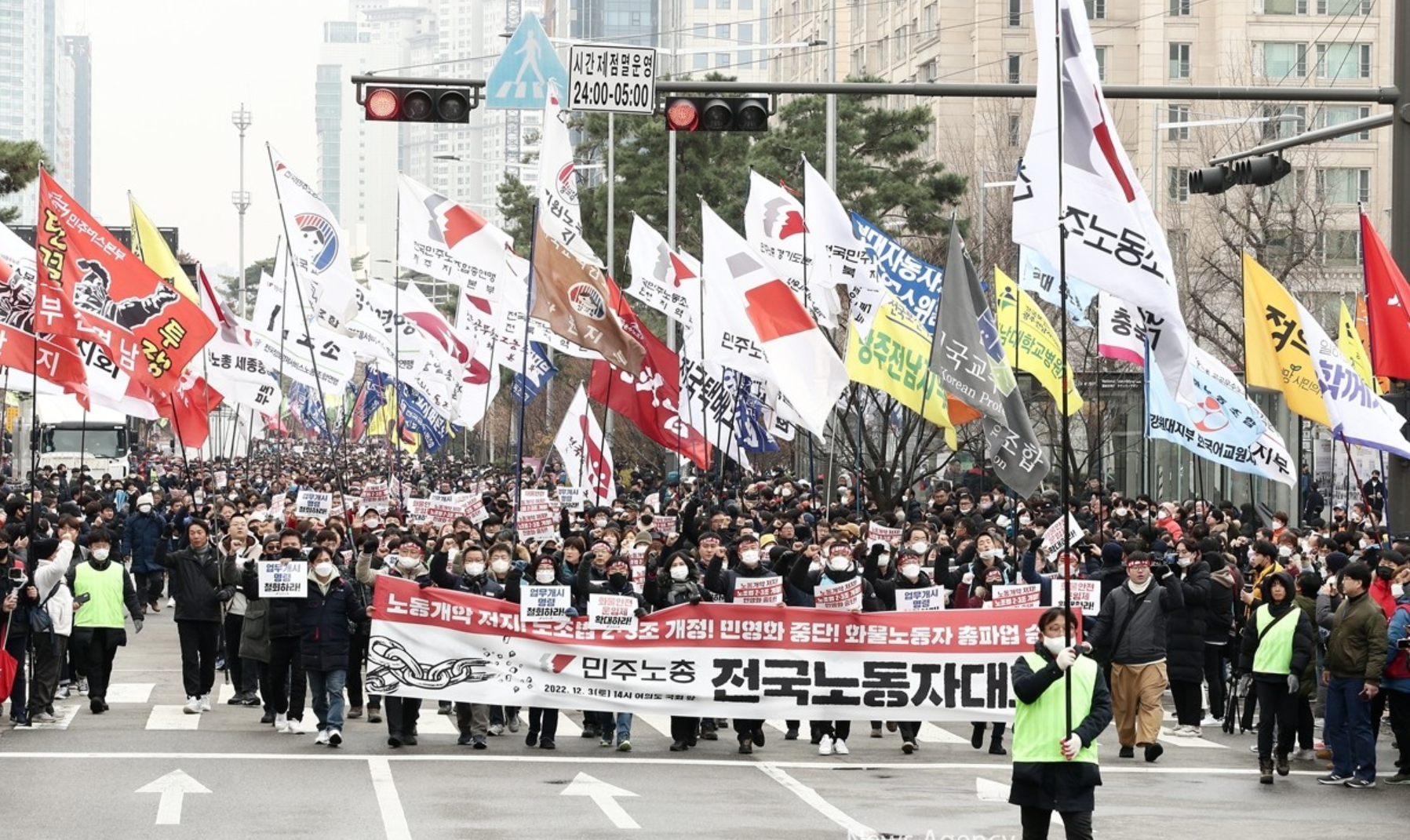
Trade unions play a significant role in Korean labor relations, although overall unionization remains relatively low. The trade union density in Korea is approximately 13%, representing about 2.8 million union members out of a total workforce of roughly 21 million. (2024 data)
Understanding how trade unions are structured and regulated is essential for employers operating in Korea, particularly when managing collective bargaining or responding to union activities in the workplace.
Trade Union Structure in Korea
Enterprise Unions & Supra-Enterprise Unions
Trade unions in Korea can broadly be divided into two categories: enterprise unions (기업별 노조) and supra-enterprise unions (초기업 노조).
Enterprise unions are established at the company level, where employees of a single company, regardless of their occupation or industry, join and participate as members. As of 2024, around 41% of union members in Korea belonged to enterprise unions.
Supra-enterprise unions, on the other hand, organize workers beyond the boundaries of a single company or workplace. They take various forms, including industrial unions (산업별 노조), occupational unions (직종별 노조), regional unions (지역별 노조), and general unions (일반노조). As of 2024, approximately 59% of union members in Korea belonged to supra-enterprise unions.
Among these, industrial unions are a major form of supra-enterprise union. They are organized across companies within the same industry, with workers employed by different companies in that industry directly joining the union as members. Major industrial unions include the KMWU (Korean Metal Workers’ Union), KHMU (Korean Health and Medical Workers’ Union), and KPTU (Korean Public Service and Transport Workers’ Union), and the KFIU (Korea Financial Industry Union).
At the highest level are national confederations, which bring together multiple trade unions and union federations as affiliated organizations. These organizations serve as umbrella bodies that coordinate activities among their affiliates and represent broader labor interests at the national level.
National Confederations: FKTU and KCTU
In Korea, there are two major national trade union confederations: the FKTU (Federation of Korean Trade Unions, Hankuk Nochong) and the KCTU (Korean Confederation of Trade Unions, Minju Nochong).
As of 2024, the FKTU represented approximately 43% of total union membership, while the KCTU represented approximately 39%. Around 18% of union members belonged to unions that were not affiliated with either national confederation.
Both the FKTU and KCTU are umbrella organizations comprising numerous trade unions and union federations across Korea. They represent their affiliated organizations and workers in areas such as labor policy and broader labor-related social and economic issues. The KMWU, KHMU, and KPTU are affiliated with the KCTU, while the KFIU is affiliated with the FKTU.
Key Legal Features of Trade Union Activities in Korea
Legal Protection of Union Activities
Under Korean law, workers have the right to freely organize and join trade unions. Multiple unions may also exist within a single workplace.
Employers are prohibited from imposing disadvantages on workers or pursuing civil or criminal liability against them for legitimate trade union activities conducted within the scope of the law. *See our article on unfair labor practices under Korean labor law.
As a general rule, trade union activities should take place outside working hours unless otherwise permitted by rules of employment, collective agreements, established workplace practices, or with the employer’s consent.
When union activities occur within the workplace, they must comply with reasonable rules or restrictions based on the employer’s authority to manage and control company facilities.
Union Shop Agreements
A union shop agreement refers to a collective agreement under which employees are required to become members of a trade union as a condition of employment, provided that the union represents at least two-thirds of the workers at the workplace. The Trade Union and Labor Relations Adjustment Act permits such agreements. Where a union shop agreement is in place, the employer is obligated to dismiss an employee who does not join the relevant union within a specified period after hiring.
In Korea, union shop agreements are generally uncommon, however, they do exist in the taxi and city bus sectors.
Time-Off System
The Trade Union and Labor Relations Adjustment Act provides for a time-off system that allows certain hours spent on trade union activities to be recognized as paid working hours without loss of wages.
The Act sets limits on the number of permissible time-off hours based on the size of the union’s membership. Within these statutory limits, labor and management may determine, through collective or other agreements, the total number of time-off hours and the number of eligible employees.
Employees designated to use such time are referred to as time-off workers, typically union officials, and may use the agreed hours to perform union-related duties prescribed by law. Activities outside the permitted scope will not be treated as paid working time.
Where multiple unions exist within the same workplace, the statutory time-off limit is determined based on the total number of union members across all unions, and the allocation of time-off hours must be made in a fair and reasonable manner.
Key Takeaways
Understanding the structure and legal framework governing trade unions is important for both employers and employees navigating labor relations in Korea. Trade union rights are strongly protected under Korean law, while union activities are also subject to specific legal requirements and limitations. A clear understanding of these rules can help both employers and employees manage union-related matters appropriately and avoid unnecessary disputes.
For assistance with trade union matters under Korean labor law, please contact us.
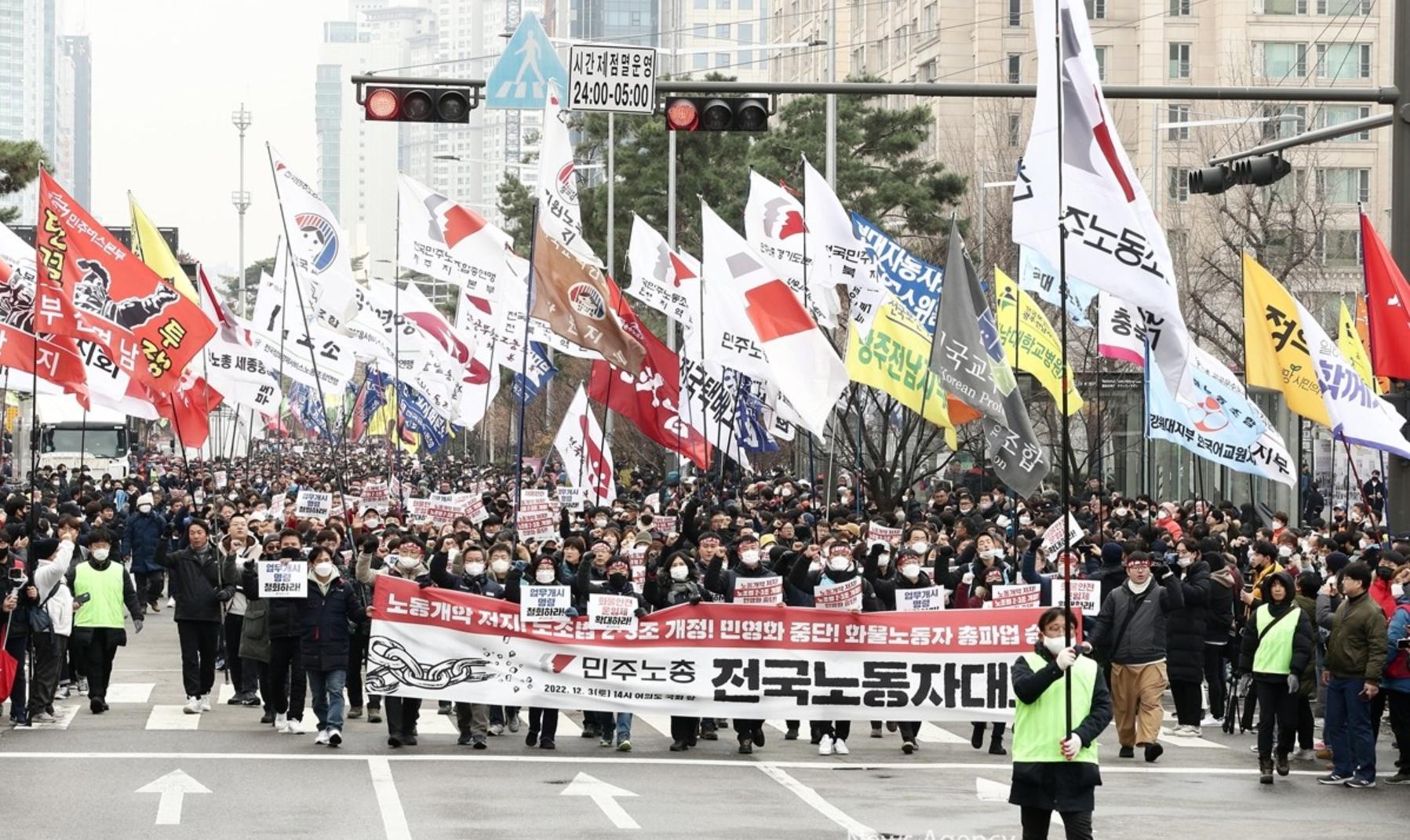
Trade unions play a significant role in Korean labor relations, although overall unionization remains relatively low. The trade union density in Korea is approximately 13%, representing about 2.8 million union members out of a total workforce of roughly 21 million. (2024 data)
Understanding how trade unions are structured and regulated is essential for employers operating in Korea, particularly when managing collective bargaining or responding to union activities in the workplace.
Trade unions in Korea can broadly be divided into two categories: enterprise unions (기업별 노조) and supra-enterprise unions (초기업 노조).
Enterprise unions are established at the company level, where employees of a single company, regardless of their occupation or industry, join and participate as members. As of 2024, around 41% of union members in Korea belonged to enterprise unions.
Supra-enterprise unions, on the other hand, organize workers beyond the boundaries of a single company or workplace. They take various forms, including industrial unions (산업별 노조), occupational unions (직종별 노조), regional unions (지역별 노조), and general unions (일반노조). As of 2024, approximately 59% of union members in Korea belonged to supra-enterprise unions.
Among these, industrial unions are a major form of supra-enterprise union. They are organized across companies within the same industry, with workers employed by different companies in that industry directly joining the union as members. Major industrial unions include the KMWU (Korean Metal Workers’ Union), KHMU (Korean Health and Medical Workers’ Union), and KPTU (Korean Public Service and Transport Workers’ Union), and the KFIU (Korea Financial Industry Union).
At the highest level are national confederations, which bring together multiple trade unions and union federations as affiliated organizations. These organizations serve as umbrella bodies that coordinate activities among their affiliates and represent broader labor interests at the national level.
In Korea, there are two major national trade union confederations: the FKTU (Federation of Korean Trade Unions, Hankuk Nochong) and the KCTU (Korean Confederation of Trade Unions, Minju Nochong).
As of 2024, the FKTU represented approximately 43% of total union membership, while the KCTU represented approximately 39%. Around 18% of union members belonged to unions that were not affiliated with either national confederation.
Both the FKTU and KCTU are umbrella organizations comprising numerous trade unions and union federations across Korea. They represent their affiliated organizations and workers in areas such as labor policy and broader labor-related social and economic issues. The KMWU, KHMU, and KPTU are affiliated with the KCTU, while the KFIU is affiliated with the FKTU.
Under Korean law, workers have the right to freely organize and join trade unions. Multiple unions may also exist within a single workplace.
Employers are prohibited from imposing disadvantages on workers or pursuing civil or criminal liability against them for legitimate trade union activities conducted within the scope of the law. *See our article on unfair labor practices under Korean labor law.
As a general rule, trade union activities should take place outside working hours unless otherwise permitted by rules of employment, collective agreements, established workplace practices, or with the employer’s consent.
When union activities occur within the workplace, they must comply with reasonable rules or restrictions based on the employer’s authority to manage and control company facilities.
A union shop agreement refers to a collective agreement requiring employees to become members of a trade union as a condition of employment, provided that the union represents at least two-thirds of the workers at the workplace. The Trade Union and Labor Relations Adjustment Act permits such agreements. Where a valid union shop agreement exists, an employer is required to dismiss an employee who fails to join the union within a specified period after hiring.
In practice, however, union shop agreements are relatively uncommon in Korea, although they can be found in certain sectors such as taxi and city bus services.
The Trade Union and Labor Relations Adjustment Act provides for a time-off system that allows certain hours spent on trade union activities to be recognized as paid working hours without loss of wages.
The Act sets limits on the number of permissible time-off hours based on the size of the union’s membership. Within these statutory limits, labor and management may determine, through collective or other agreements, the total number of time-off hours and the number of eligible employees.
Employees designated to use such time are referred to as time-off workers, typically union officials, and may use the agreed hours to perform union-related duties prescribed by law. Activities outside the permitted scope will not be treated as paid working time.
Where multiple unions exist within the same workplace, the statutory time-off limit is determined based on the total number of union members across all unions, and the allocation of time-off hours must be made in a fair and reasonable manner.
Understanding the structure and legal framework governing trade unions is important for both employers and employees navigating labor relations in Korea. Trade union rights are strongly protected under Korean law, while union activities are also subject to specific legal requirements and limitations. A clear understanding of these rules can help both employers and employees manage union-related matters appropriately and avoid unnecessary disputes.
For assistance with trade union matters under Korean labor law, please contact us.

