
Temporary Agency Work and Disguised Subcontracting in Korea
Legal Structure and Compliance Risks
Who Is an Agency Worker?
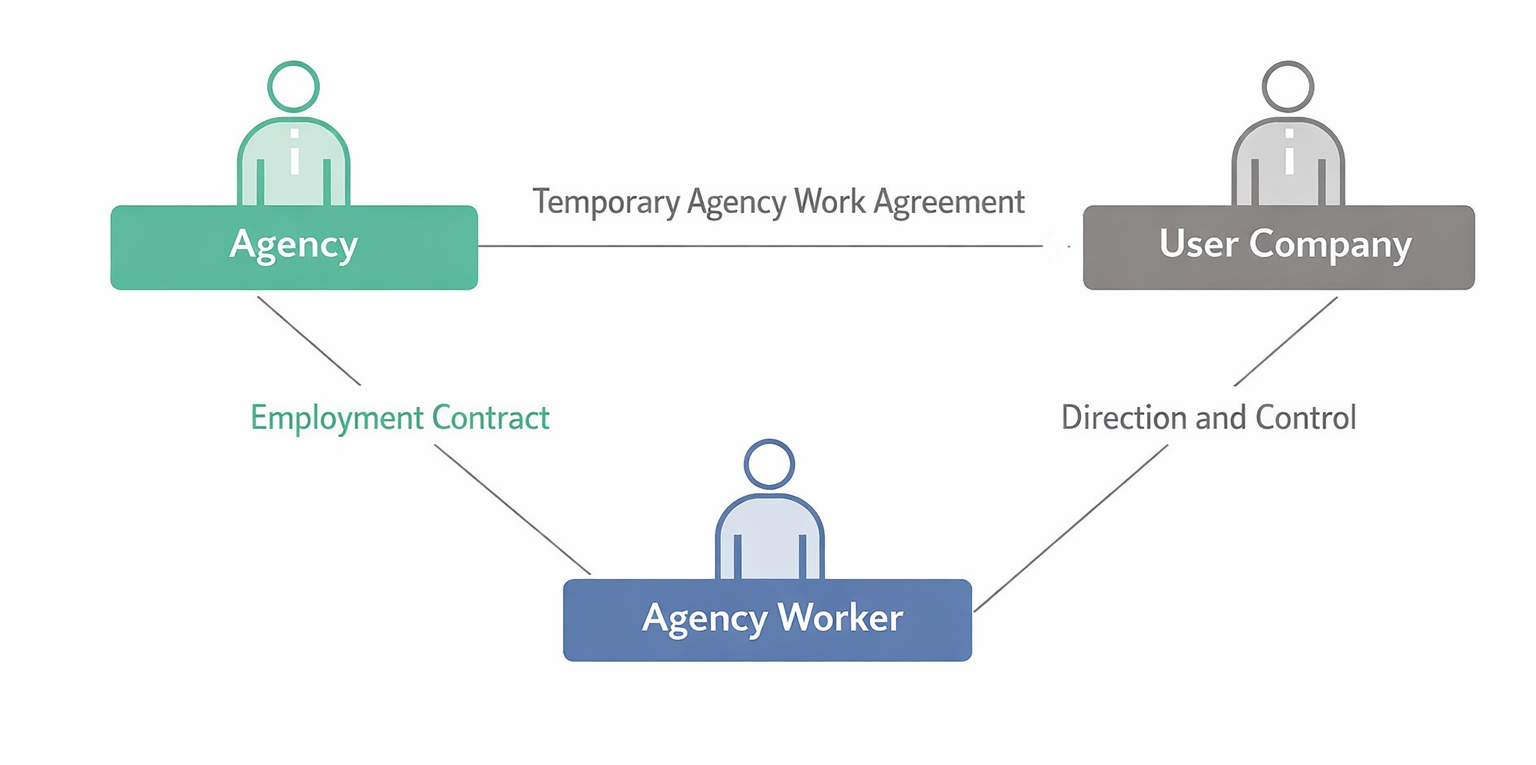
An agency worker, under the Act on the Protection of Temporary Agency Workers (“Temporary Agency Work Act”), is an individual who is employed by a temporary work agency but is assigned under a temporary agency work agreement to a user company to perform work under that company’s direction and control.
Dual-Employer Structure
For agency workers, the agency that formally employs them and the company that directs and supervises their day-to-day work are different entities. This divided structure can create uncertainty about who bears legal responsibility, and may leave workers vulnerable to disadvantages in their terms and conditions of employment. As a safeguard, the Act on the Protection of Temporary Agency Workers sets out clear statutory standards governing their working conditions.
The employer’s responsibility for agency workers lies primarily with the temporary work agency as the contractual employer, while the user company is responsible for matters related to the performance of work—such as working hours, rest periods, holidays, and occupational safety and health—and both may be regarded as employers for certain matters.
Types of Work Eligible for Temporary Agency Work
Temporary agency work is permitted only for specific types of work set out in the law. In particular, the use of agency workers in direct production processes in the manufacturing sector is prohibited, and the permissible scope is limited to 32 categories of work specified by law.
However, by way of exception, temporary agency work may be allowed outside these categories where an employer needs to cover absences due to maternity leave, illness, or injury, or where there is a temporary or occasional need for additional staff.
Certain types of work, however, are strictly prohibited under all circumstances. These include work performed at construction sites, seafaring work, and work that is hazardous or harmful, as defined by statute.
If temporary agency workers are assigned to work that does not fall within the permitted categories, both the temporary work agency and the user company may be subject to criminal penalties of up to 3 years’ imprisonment or a fine of up to KRW 30 million.
Duration Allowed for Temporary Agency Work
As a general rule, the period of temporary agency work may not exceed 1 year. However, where the temporary work agency, the user company, and the agency worker all agree, the period may be extended once for up to an additional year. Accordingly, the maximum total period is 2 years. If this limit is exceeded, both the temporary work agency and the user company may be subject to criminal penalties of up to 3 years’ imprisonment or a fine of up to KRW 30 million.
Obligation to Directly Employ Agency Workers
A user company becomes subject to a legal obligation to directly employ an agency worker if it uses that worker in non-permitted types of work, violates the statutory limit on the period of use, or receives the worker from an unlicensed agency. Once this obligation arises, failure to comply may result not only in legal liability toward the worker but also in the imposition of administrative fines.
Unlawful Temporary Agency Work (Disguised Subcontracting)
In a genuine subcontracting relationship, the client company does not exercise direct control or supervision over the workers employed by the subcontractor. However, where a subcontracting arrangement exists only in form, and the client company in practice directs, supervises, or uses the subcontractor’s workers, it may be deemed "unlawful temporary agency work"(불법파견), commonly referred to as "disguised subcontracting"(위장도급).
When outsourcing work to another contractor, companies should be aware of this risk. In assessing the nature of the arrangement, courts consider several factors, such as whether the client company exercises substantial direction or control over the contractor’s workers, whether the workers are effectively integrated into the client company’s business operations, whether the client company is involved in personnel or labor-management decisions, and whether the contractor maintains its own organization and equipment necessary to perform the contracted work.
If such an arrangement is found to constitute unlawful temporary agency work, the company may face criminal penalties, administrative fines, and an obligation to directly employ the affected workers.
Prohibition of Discrimination
An employer must not treat a temporary agency worker less favorably than a regular employee performing the same or similar work on the grounds that the worker is a temporary agency worker. For further details, please see our article here. For further details, see our article here.
Employer Takeaways
When outsourcing work to third-party contractors, employers should ensure that the arrangement does not involve direct control or supervision over the contractor’s workers in practice. Misclassification of a subcontracting relationship may result in significant legal exposure, including criminal liability and an obligation to directly employ the affected workers.
For assistance in reviewing and managing potential disguised subcontracting risks in outsourcing arrangements under Korean labor law, please feel free to contact us.
Legal Structure and Compliance Risks
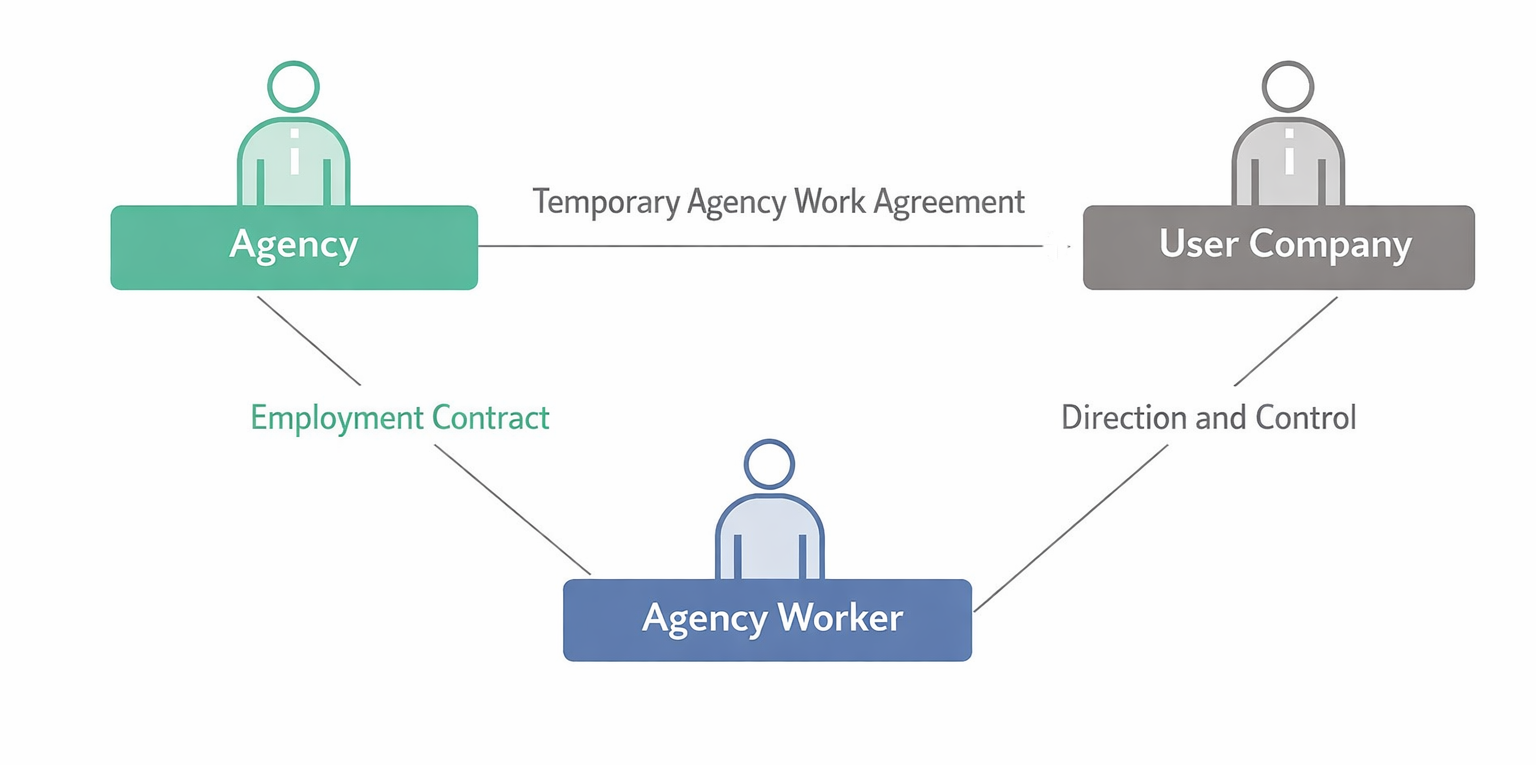
An agency worker, under the Act on the Protection of Temporary Agency Workers (“Temporary Agency Work Act”), is an individual who is employed by a temporary work agency but is assigned under a temporary agency work agreement to a user company to perform work under that company’s direction and control.
For agency workers, the agency that formally employs them and the company that directs and supervises their day-to-day work are different entities. This divided structure can create uncertainty about who bears legal responsibility, and may leave workers vulnerable to disadvantages in their terms and conditions of employment. As a safeguard, the Act on the Protection of Temporary Agency Workers sets out clear statutory standards governing their working conditions.
The employer’s responsibility for agency workers lies primarily with the temporary work agency as the contractual employer, while the user company is responsible for matters related to the performance of work—such as working hours, rest periods, holidays, and occupational safety and health—and both may be regarded as employers for certain matters.
Temporary agency work is permitted only for specific types of work set out in the law. In particular, the use of agency workers in direct production processes in the manufacturing sector is prohibited, and the permissible scope is limited to 32 categories of work specified by law.
However, by way of exception, temporary agency work may be allowed outside these categories where an employer needs to cover absences due to maternity leave, illness, or injury, or where there is a temporary or occasional need for additional staff. Certain types of work, however, are strictly prohibited under all circumstances. These include work performed at construction sites, seafaring work, and work that is hazardous or harmful, as defined by statute.
If temporary agency workers are assigned to work that does not fall within the permitted categories, both the temporary work agency and the user company may be subject to criminal penalties of up to 3 years’ imprisonment or a fine of up to KRW 30 million.
As a general rule, the period of temporary agency work may not exceed 1 year. However, where the temporary work agency, the user company, and the agency worker all agree, the period may be extended once for up to an additional year. Accordingly, the maximum total period is 2 years. If this limit is exceeded, both the temporary work agency and the user company may be subject to criminal penalties of up to 3 years’ imprisonment or a fine of up to KRW 30 million.
A user company becomes subject to a legal obligation to directly employ an agency worker if it uses that worker in non-permitted types of work, violates the statutory limit on the period of use, or receives the worker from an unlicensed agency. Once this obligation arises, failure to comply may result not only in legal liability toward the worker but also in the imposition of administrative fines.
In a genuine subcontracting relationship, the client company does not exercise direct control or supervision over the workers employed by the subcontractor. However, where a subcontracting arrangement exists only in form, and the client company in practice directs, supervises, or uses the subcontractor’s workers, it may be deemed "unlawful temporary agency work"(불법파견), commonly referred to as "disguised subcontracting" (위장도급).
When outsourcing work to another contractor, companies should be aware of this risk. In assessing the nature of the arrangement, courts consider several factors, such as whether the client company exercises substantial direction or control over the contractor’s workers, whether the workers are effectively integrated into the client company’s business operations, whether the client company is involved in personnel or labor-management decisions, and whether the contractor maintains its own organization and equipment necessary to perform the contracted work.
If such an arrangement is found to constitute unlawful temporary agency work, the company may face criminal penalties, administrative fines, and an obligation to directly employ the affected workers.
An employer must not treat a temporary agency worker less favorably than a regular employee performing the same or similar work on the grounds that the worker is a temporary agency worker. For further details, please see our article here. For further details, see our article here.
When outsourcing work to third-party contractors, employers should ensure that the arrangement does not involve direct control or supervision over the contractor’s workers in practice. Misclassification of a subcontracting relationship may result in significant legal exposure, including criminal liability and an obligation to directly employ the affected workers.
For assistance in reviewing and managing potential disguised subcontracting risks in outsourcing arrangements under Korean labor law, please feel free to contact us.

