
Industrial Action in Korea
When Is It Lawful – and When Is It Not?
What Counts as Industrial Action?
Concept and Types of Industrial Action
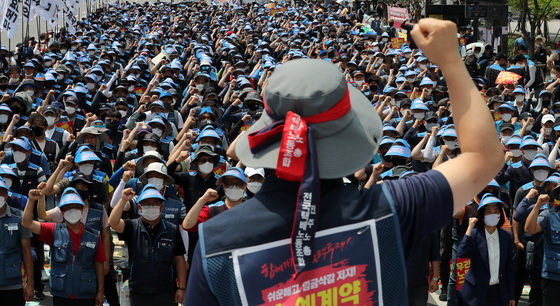
Under the Trade Union Act, industrial action refers to acts by parties to labor relations undertaken to press their claims, or in response to such acts, that disrupt the normal operation of business. Industrial action therefore encompasses action taken by both employees and employers.
On the employee side, industrial action typically involves collective action that interferes with normal business operations. Activities such as merely posting banners, handing out leaflets during breaks, or wearing ribbons or headbands therefore do not qualify as industrial action if they do not cause such disruption.
In this context, the “normal operation of business” includes the customary or de facto manner in which work is ordinarily performed. Therefore, if employees collectively refuse to perform overtime work that has been customarily required, thereby disrupting normal business operations, such acts may constitute industrial action.
Industrial action by employees takes various forms, including strikes, where employees refuse to work altogether; slowdowns, where employees continue working but intentionally reduce their pace or efficiency; and work-to-rule actions, where employees strictly follow laws, collective agreements, and workplace rules to the letter, thereby collectively reducing productivity.
When Does Industrial Action Become Lawful?
Four Legal Requirements You Must Satisfy
Lawful industrial action is exempt from civil and criminal liability and is protected against various forms of detrimental treatment. Whether industrial action is lawful is determined based on criteria established under the Trade Union and Industrial Relations Adjustment Act (“Trade Union Act”) and relevant court precedents. To be considered lawful, industrial action must satisfy all four requirements regarding (i) the parties involved, (ii) the objective pursued, (iii) the timing and procedures, and (iv) the means and methods employed.
1. Who Can Lawfully Strike?
(Parties Involved)
To qualify as lawful industrial action, the action must be undertaken by a trade union as defined under the Trade Union Act. Therefore, if a group of individual members acts independently without the authorization or collective will of the union, the action will not be regarded as lawful. In workplaces with multiple unions, industrial action must be initiated by the bargaining representative union designated through the single bargaining channel procedure.
2. What Purposes Are Permitted?
(Objective Requirements)
For industrial action to be lawful, its objective must generally relate to a collective dispute over working conditions.
Disputes of Interests vs. Disputes of Rights
A “dispute of interests” (이익분쟁) concerns the establishment, maintenance, or modification of working conditions, such as demands for wage increases or the conclusion or renewal of a collective agreement. Such matters may be pursued through industrial action.
By contrast, a “dispute of rights” (권리분쟁) concerns the interpretation or application of rights that have already been established under laws, collective agreements, or work rules. In principle, such disputes should be resolved through judicial or administrative procedures rather than industrial action. Examples include claims for unpaid wages, reinstatement of dismissed workers, enforcement of collective agreements, and remedies for unfair labor practices.
However, the amended Trade Union Act, effective from March 10, 2026, has expanded the scope of labor disputes. A dispute arising from an employer’s clear breach of key provisions of a collective agreement – including provisions on wages, working hours, discipline, or occupational safety – may now constitute a labor dispute even though it would traditionally have been classified as a dispute of rights. For further details, please refer [here].
Managerial Decisions
Industrial action generally cannot be undertaken solely to challenge matters within the employer’s managerial authority, such as decisions concerning business operations, restructuring, closure, or transfer of the business.
However, the amended Trade Union Act has expanded the scope of labor disputes to include certain managerial decisions that directly affect employees’ working conditions. For further details, please refer [here].
Political Objectives
The objective must also concern matters that the employer has the authority to decide or control. Industrial action for purely political purposes – such as supporting or opposing legislation, demanding the release of detainees, or protesting government policies – therefore does not qualify as lawful industrial action.
Multiple Objectives
If industrial action has multiple objectives and some are unlawful, its lawfulness is determined by its primary objective. The primary objective is the one without which the industrial action would not have taken place.
3. When Can Industrial Action Be Taken?
(Timing & Procedural Requirements)
Industrial action is lawful only as a last resort, after sufficient efforts have been made through collective bargaining and all mandatory procedures, including mediation and a union strike ballot, have been completed.
When collective bargaining reaches an impasse, industrial action may only be taken after completing the mediation procedure prescribed under the Trade Union Act. Upon an application for mediation, the Labor Relations Commission (LRC) hears both parties and presents a mediation proposal. If both parties accept the proposal, it takes effect as a collective agreement. If either party rejects it, the mediation procedure ends, and the trade union may proceed with industrial action.
In addition, the Trade Union Act requires industrial action to be approved by a majority of all union members through a direct and secret ballot. Industrial action conducted without following this voting procedure or without the approval of a majority of all union members is not lawful.
Moreover, industrial action aimed at changing or abolishing terms already agreed upon in a collective agreement is unlawful during the term of the agreement. This is known as the “peace obligation" (평화의무), which is inherent in the nature of a collective agreement even if it is not expressly stipulated.
4. What Methods Are Permitted?
(Means and Methods)
Industrial action typically involves a partial or complete refusal to work, or other collective action that places economic pressure on the employer. It must respect the employer’s property rights and must not involve violence, destruction of property, or other unlawful conduct.
In the case of workplace occupation, limited occupation of part of the premises may be lawful if it does not exclude the employer from the workplace or interfere with managerial control. However, full or exclusive occupation that prevents access by the employer or non-union members, or substantially interferes with the employer’s control of the premises, is unlawful.
In addition, the Trade Union Act prohibits the occupation of production or other critical business facilities and the disruption of the normal functioning of safety-protection facilities. Such conduct may also result in criminal penalties.
If It Fails the Test: Unlawful Industrial Action
If any one of the four requirements mentioned above is not satisfied, the industrial action will be deemed unlawful. Unlawful industrial action is not entitled to civil or criminal immunity under the Trade Union Act. Accordingly, such conduct may constitute criminal offenses such as trespass, refusal to leave, or obstruction of business, and the union and its members may be held liable for loss or damage incurred by the employer.
In addition, disciplinary measures, including dismissal may be imposed where the industrial action infringes on workplace order.
How Can Employers Respond?
• Lockouts: When the Employer Can Shut the Doors
A lockout is an employer’s refusal to accept work from employees as a countermeasure against industrial action, thereby relieving the employer of the obligation to pay wages. It is legally recognized as a means of restoring balance in labor-management relations where industrial action has placed the employer at a significant disadvantage.
To be lawful, a lockout may only take place after industrial action has begun and must be defensive in nature. A preemptive lockout, or one used offensively to weaken the union rather than to defend against industrial action, is unlawful.
During a lawful lockout, the employer is not required to pay wages and may require employees participating in industrial action to leave the workplace. Employees who refuse to leave may face criminal liability for refusal to leave.
• Replacement Workers: Who Can Step In – and Who Cannot
The Trade Union Act restricts employers from hiring or using persons who are not connected with the business to perform work suspended during industrial action. Employers are also prohibited from outsourcing or subcontracting such work in order to continue operations during the industrial action.
However, these restrictions do not prevent the employer from using its existing workforce. Employees who do not participate in the strike – including union members who choose not to participate and non-union employees – may be assigned to perform the suspended work. Where the employer operates multiple workplaces, employees from the head office or other workplaces may also be assigned to such work. Their working hours may also be extended, subject to applicable working-hour limits.
For assistance with industrial action and related issues under Korean labor law, please contact us.
When Is It Lawful – and When Is It Not?
What Counts as Industrial Action?
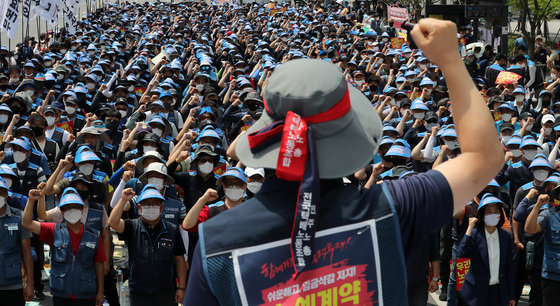
Under the Trade Union Act, industrial action refers to acts by parties to labor relations undertaken to press their claims, or in response to such acts, that disrupt the normal operation of business. Industrial action therefore encompasses action taken by both employees and employers.
On the employee side, industrial action typically involves collective action that interferes with normal business operations. Activities such as merely posting banners, handing out leaflets during breaks, or wearing ribbons or headbands therefore do not qualify as industrial action if they do not cause such disruption.
In this context, the “normal operation of business” includes the customary or de facto manner in which work is ordinarily performed. Therefore, if employees collectively refuse to perform overtime work that has been customarily required, thereby disrupting normal business operations, such acts may constitute industrial action.
Industrial action by employees takes various forms, including strikes, where employees refuse to work altogether; slowdowns, where employees continue working but intentionally reduce their pace or efficiency; and work-to-rule actions, where employees strictly follow laws, collective agreements, and workplace rules to the letter, thereby collectively reducing productivity.
Lawful industrial action is exempt from civil and criminal liability and is protected against various forms of detrimental treatment. Whether industrial action is lawful is determined based on criteria established under the Trade Union and Industrial Relations Adjustment Act (“Trade Union Act”) and relevant court precedents. To be considered lawful, industrial action must satisfy all four requirements regarding (i) the parties involved, (ii) the objective pursued, (iii) the timing and procedures, and (iv) the means and methods employed.
To qualify as lawful industrial action, the action must be undertaken by a trade union as defined under the Trade Union Act. Therefore, if a group of individual members acts independently without the authorization or collective will of the union, the action will not be regarded as lawful. In workplaces with multiple unions, industrial action must be initiated by the bargaining representative union (교섭대표노조) designated through the single bargaining channel procedure (교섭창구단일화절차).
For industrial action to be lawful, its objective must generally relate to a collective dispute over working conditions.
Disputes of Interests vs. Disputes of Rights
A “dispute of interests” (이익분쟁) concerns the establishment, maintenance, or modification of working conditions, such as demands for wage increases or the conclusion or renewal of a collective agreement. Such matters may be pursued through industrial action.
By contrast, a “dispute of rights” (권리분쟁) concerns the interpretation or application of rights that have already been established under laws, collective agreements, or work rules. In principle, such disputes should be resolved through judicial or administrative procedures rather than industrial action. Examples include claims for unpaid wages, reinstatement of dismissed workers, enforcement of collective agreements, and remedies for unfair labor practices.
However, the amended Trade Union Act, effective from March 10, 2026, has expanded the scope of labor disputes. A dispute arising from an employer’s clear breach of key provisions of a collective agreement – including provisions on wages, working hours, discipline, or occupational safety – may now constitute a labor dispute even though it would traditionally have been classified as a dispute of rights. For further details, please refer [here].
Managerial Decisions
Industrial action generally cannot be undertaken solely to challenge matters within the employer’s managerial authority, such as decisions concerning business operations, restructuring, closure, or transfer of the business.
However, the amended Trade Union Act has expanded the scope of labor disputes to include certain managerial decisions that directly affect employees’ working conditions. For further details, please refer [here].
Political Objectives
The objective must also concern matters that the employer has the authority to decide or control. Industrial action for purely political purposes – such as supporting or opposing legislation, demanding the release of detainees, or protesting government policies – therefore does not qualify as lawful industrial action.
Multiple Objectives
If industrial action has multiple objectives and some are unlawful, its lawfulness is determined by its primary objective. The primary objective is the one without which the industrial action would not have taken place.
Industrial action is lawful only as a last resort, after sufficient efforts have been made through collective bargaining and all mandatory procedures, including mediation and a union strike ballot, have been completed.
When collective bargaining reaches an impasse, industrial action may only be taken after completing the mediation procedure prescribed under the Trade Union Act. Upon an application for mediation, the Labor Relations Commission (LRC) hears both parties and presents a mediation proposal. If both parties accept the proposal, it takes effect as a collective agreement. If either party rejects it, the mediation procedure ends, and the trade union may proceed with industrial action.
In addition, the Trade Union Act requires industrial action to be approved by a majority of all union members through a direct and secret ballot. Industrial action conducted without following this voting procedure or without the approval of a majority of all union members is not lawful.
Moreover, industrial action aimed at changing or abolishing terms already agreed upon in a collective agreement is unlawful during the term of the agreement. This is known as the “peace obligation" (평화의무), which is inherent in the nature of a collective agreement even if it is not expressly stipulated.
If any of the four requirements above is not satisfied, the industrial action is unlawful. Unlawful industrial action is not protected by the civil and criminal immunity provided under the Trade Union Act. Accordingly, participants may face criminal liability for offenses such as trespass, refusal to leave, or obstruction of business, and the union and its members may be held liable for loss or damage caused to the employer.
In addition, employees who participate in unlawful industrial action may be subject to disciplinary action, including dismissal, where their conduct disrupts workplace order.
If any one of the four requirements mentioned above is not satisfied, the industrial action will be deemed unlawful. Unlawful industrial action is not entitled to civil or criminal immunity under the Trade Union Act. Accordingly, such conduct may constitute criminal offenses such as trespass, refusal to leave, or obstruction of business, and the union and its members may be held liable for loss or damage incurred by the employer.
In addition, disciplinary measures, including dismissal may be imposed where the industrial action infringes on workplace order.
A lockout is an employer’s refusal to accept work from employees as a countermeasure against industrial action, thereby relieving the employer of the obligation to pay wages. It is legally recognized as a means of restoring balance in labor-management relations where industrial action has placed the employer at a significant disadvantage.
To be lawful, a lockout may only take place after industrial action has begun and must be defensive in nature. A preemptive lockout, or one used offensively to weaken the union rather than to defend against industrial action, is unlawful.
During a lawful lockout, the employer is not required to pay wages and may require employees participating in industrial action to leave the workplace. Employees who refuse to leave may face criminal liability for refusal to leave.
The Trade Union Act restricts employers from hiring or using persons who are not connected with the business to perform work suspended during industrial action. Employers are also prohibited from outsourcing or subcontracting such work in order to continue operations during the industrial action.
However, these restrictions do not prevent the employer from using its existing workforce. Employees who do not participate in the strike – including union members who choose not to participate and non-union employees – may be assigned to perform the suspended work. Where the employer operates multiple workplaces, employees from the head office or other workplaces may also be assigned to such work. Their working hours may also be extended, subject to applicable working-hour limits.
For assistance with industrial action and related issues under Korean labor law, please contact us.

