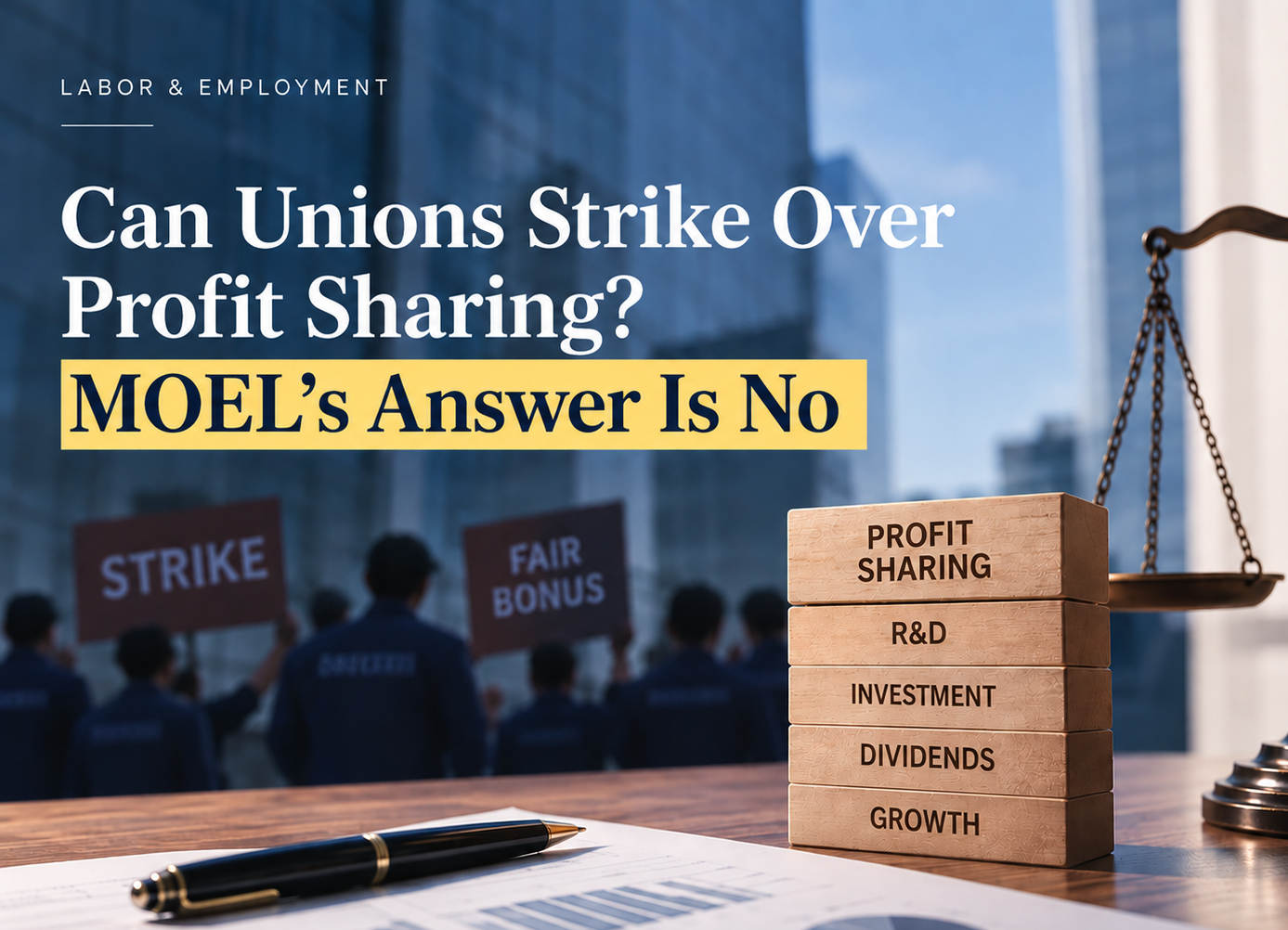
Large-scale disputes over performance bonuses at Samsung Electronics this year have raised an important legal question: "Can unions legally strike over profit sharing?" ※ For more details, please see here.
The answer depends largely on whether performance bonuses linked to corporate profits are mandatory subjects of collective bargaining. A strike over non-mandatory bargaining subjects can be unlawful.
Traditionally, many have viewed decisions on how to distribute corporate profits as part of the employer’s managerial prerogative and therefore not mandatory subjects of collective bargaining. However, the amended Trade Union Act, which took effect on March 10, 2026, expanded the scope of labor disputes to include “matters concerning managerial decisions that affect working conditions.” ※ For more details, please see here.
This led to conflicting views as to whether profit sharing could be a mandatory bargaining subject or remained a purely managerial decision even under the amended Act. This created considerable uncertainty in practice.
In response, the Ministry of Employment and Labor (MOEL) issued guidelines to clarify the issue and prevent labor-management disputes. The key points are:
1. Performance Bonuses Linked to Corporate Profits
MOEL clarified that demands for performance bonuses linked to corporate profits, such as revenue, operating profit, or net income, are not considered mandatory subjects of collective bargaining or subjects of labor disputes.
MOEL explained that corporate profits are used for various management purposes, including R&D, capital investment, and dividends, and also involve the interests of third parties such as shareholders, creditors, and the government. Requiring a fixed percentage of such profits to be allocated to performance bonuses could therefore affect the rights and interests of third parties and fundamentally restrict a company’s freedom to conduct its business.
2. Other Management Decisions
- Establishment or relocation of facilities: Decisions on facility location, overseas relocation, and the scale and timing of investment are not mandatory bargaining subjects. However, once related plans become sufficiently concrete and changes to working conditions can be objectively anticipated, matters such as reassignment, work arrangements, and relocation support may become bargaining subjects.
- Sale or acquisition of a business: Decisions on the sale itself, its terms, or the buyer are not mandatory bargaining subjects. However, once related workforce plans become sufficiently concrete and changes to working conditions can be objectively anticipated, matters such as continued employment, measures to avoid layoffs, and maintaining existing working conditions may become bargaining subjects.
- Introduction of AI, automation, and other new technologies: The introduction of new technology itself is not a mandatory bargaining subject. However, once related workforce plans become sufficiently concrete and changes to working conditions can be objectively anticipated, matters such as reassignment, employment protection, working hours, and health and safety measures may become bargaining subjects.
In short, MOEL draws a distinction between a management decision itself and changes in working conditions resulting from that decision. The former is generally not a mandatory subject of collective bargaining, while the latter may become subject to bargaining once changes to working conditions can be objectively anticipated.
What the Guidelines Mean in Practice
The guidelines have drawn strong opposition from labor unions.
Although MOEL guidelines are likely to serve as an important standard in the handling of actual cases by MOEL and the Labor Relations Commission, they do not have the force of law and are not binding on the courts. The courts may therefore take a different approach in future cases.
Nevertheless, as MOEL has now provided specific standards for interpreting and applying the amended Trade Union Act, the guidelines are expected to play an important role in practice in collective bargaining, industrial dispute mediation, industrial action, and unfair labor practice cases.
영업이익 연동 성과급, 파업의 대상이 될 수 있을까? 고용노동부가 답을 내놓았습니다.
영업이익의 일정 몫을 성과급으로 배분하는 경영성과급은 노동쟁의 대상이 될 수 없다는 정부 지침이 나왔습니다.
올해 삼성전자의 대규모 성과급 분쟁을 계기로 “순수한 영업성과의 배분에 관한 사항이 과연 의무적 단체교섭 및 노동쟁의의 대상이 될 수 있는가?”라는 법적 논쟁이 제기되었습니다. ※ 자세한 내용은 여기를 봐주세요.
의무적 교섭대상이 아닌 사항을 주된 목적으로 하는 파업은 정당성이 부정되어 불법 쟁의행위가 될 수 있기 때문에 이는 중요한 문제입니다.
경영성과나 초과이익을 어떻게 배분할지는 사용자의 경영권에 속하는 사항으로, 전통적으로는 의무적 교섭사항에 해당하지 않는다는 견해가 많았습니다. 그러나 2026. 3. 10. 시행된 개정 노조법은 “근로조건에 영향을 미치는 사업경영상의 결정에 관한 사항”을 노동쟁의의 대상으로 확대하였습니다.
※ 자세한 내용은 내용은 여기를 봐주세요.
이에 따라 영업이익에 연동하는 성과급 요구도 적법한 쟁의행위의 대상이 될 수 있다는 견해와, 법 개정에도 불구하고 기업이익의 배분 자체는 순수한 경영상 판단에 해당하므로 의무적 교섭대상이 아니라는 견해가 대립하면서 현장에서 상당한 혼란이 있었습니다.
이에 고용노동부는 현장의 예측 가능성을 높이고 노사분쟁을 예방하기 위해 「경영성과급 등 노동쟁의 대상 시행지침」을 발표하였습니다. 주요 내용은 다음과 같습니다.
1. 기업이익과 연동하는 방식의 경영성과급
매출액, 영업이익, 당기순이익 등 ‘기업이익’과 연동하는 방식의 경영성과급 요구는 의무적 교섭대상 및 노동쟁의 대상으로 보기 어렵다고 명시하였습니다.
기업이익은 R&D, 설비투자, 배당 등 다양한 경영판단의 재원이 되고 주주·채권자·국가 등 제3자의 이해관계와도 관련되므로, 그 일정 비율을 성과급으로 배분하도록 요구하는 것은 제3자의 권익을 침해할 우려가 있고 기업의 영업의 자유를 본질적으로 제약할 수 있다는 이유입니다.
2. 기타 사업경영상의 결정
- 공장 신설·이전: 공장을 어디에 신설할지, 해외로 이전할지, 투자 규모·시기 등을 결정하는 것 자체는 의무적 교섭대상이 아닙니다. 그러나 계획이 구체화되어 근로조건의 변동이 객관적으로 예상되는 경우에는 배치전환, 근무형태 변경, 근무지 이전에 따른 지원 등이 교섭대상이 될 수 있습니다.
- 사업 매각·인수: 매각 자체의 철회·반대, 매각조건에 대한 개입, 인수자의 변경·배제 요구 등은 의무적 교섭대상이 아닙니다. 그러나 매각에 따른 인력운영계획이 구체화되면 고용승계, 정리해고 회피 및 고용안정 대책, 기존 근로조건 유지 등은 교섭대상이 될 수 있습니다.
- AI·자동화 등 신기술 도입: 신기술 도입 자체에 대한 반대는 의무적 교섭대상이 아닙니다. 그러나 도입으로 인한 인력운영계획이 구체화되어 근로조건의 변동이 객관적으로 예상되는 경우에는 배치전환, 고용안정대책, 근무시간 조정, 작업방식 변경에 따른 안전보건 대책 등이 교섭대상이 될 수 있습니다.
즉, 고용노동부는 사업경영상의 결정 그 자체와 그 결정으로 인해 발생하는 근로조건의 변화를 구별하여, 전자는 원칙적으로 의무적 교섭대상이 아니지만 후자는 근로조건의 변동이 객관적으로 예상되는 단계에 이르면 교섭대상이 될 수 있다는 기준을 제시한 것입니다.
지침의 의미와 향후 전망
이러한 고용노동부의 지침에 대해 노동계는 크게 반발하고 있습니다.
고용노동부 지침은 고용노동부 및 노동위원회의 실제 사건 처리에서는 중요한 기준으로 작용하지만, 법원을 구속하는 법규적 효력은 없으므로 향후 법원의 판단에 따라 다른 해석이 제시될 가능성도 있습니다.
다만, 개정 노조법 시행 이후 논란이 되어온 부분에 대해 고용노동부가 구체적인 해석·적용 기준을 제시한 만큼, 향후 단체교섭, 노동쟁의 조정, 쟁의행위 및 부당노동행위 사건의 실무에서는 중요한 판단기준으로 작용할 것으로 보입니다.


Large-scale disputes over performance bonuses at Samsung Electronics this year have raised an important legal question: "Can unions legally strike over profit sharing?" ※ For more details, please see here.
The answer depends largely on whether performance bonuses linked to corporate profits are mandatory subjects of collective bargaining. A strike over non-mandatory bargaining subjects can be unlawful.
Traditionally, many have viewed decisions on how to distribute corporate profits as part of the employer’s managerial prerogative and therefore not mandatory subjects of collective bargaining. However, the amended Trade Union Act, which took effect on March 10, 2026, expanded the scope of labor disputes to include “matters concerning managerial decisions that affect working conditions.” ※ For more details, please see here.
This led to conflicting views as to whether profit sharing could be a mandatory bargaining subject or remained a purely managerial decision even under the amended Act. This created considerable uncertainty in practice.
In response, the Ministry of Employment and Labor (MOEL) issued guidelines to clarify the issue and prevent labor-management disputes. The key points are:
1. Performance Bonuses Linked to Corporate Profits
MOEL clarified that demands for performance bonuses linked to corporate profits, such as revenue, operating profit, or net income, are not considered mandatory subjects of collective bargaining or subjects of labor disputes.
MOEL explained that corporate profits are used for various management purposes, including R&D, capital investment, and dividends, and also involve the interests of third parties such as shareholders, creditors, and the government. Requiring a fixed percentage of such profits to be allocated to performance bonuses could therefore affect the rights and interests of third parties and fundamentally restrict a company’s freedom to conduct its business.
2. Other Management Decisions
In short, MOEL draws a distinction between a management decision itself and changes in working conditions resulting from that decision. The former is generally not a mandatory subject of collective bargaining, while the latter may become subject to bargaining once changes to working conditions can be objectively anticipated.
What the Guidelines Mean in Practice
The guidelines have drawn strong opposition from labor unions.
Although MOEL guidelines are likely to serve as an important standard in the handling of actual cases by MOEL and the Labor Relations Commission, they do not have the force of law and are not binding on the courts. The courts may therefore take a different approach in future cases.
Nevertheless, as MOEL has now provided specific standards for interpreting and applying the amended Trade Union Act, the guidelines are expected to play an important role in practice in collective bargaining, industrial dispute mediation, industrial action, and unfair labor practice cases.
영업이익 연동 성과급, 파업의 대상이 될 수 있을까? 고용노동부가 답을 내놓았습니다.
영업이익의 일정 몫을 성과급으로 배분하는 경영성과급은 노동쟁의 대상이 될 수 없다는 정부 지침이 나왔습니다.
올해 삼성전자의 대규모 성과급 분쟁을 계기로 “순수한 영업성과의 배분에 관한 사항이 과연 의무적 단체교섭 및 노동쟁의의 대상이 될 수 있는가?”라는 법적 논쟁이 제기되었습니다. ※ 자세한 내용은 여기를 봐주세요.
의무적 교섭대상이 아닌 사항을 주된 목적으로 하는 파업은 정당성이 부정되어 불법 쟁의행위가 될 수 있기 때문에 이는 중요한 문제입니다.
경영성과나 초과이익을 어떻게 배분할지는 사용자의 경영권에 속하는 사항으로, 전통적으로는 의무적 교섭사항에 해당하지 않는다는 견해가 많았습니다. 그러나 2026. 3. 10. 시행된 개정 노조법은 “근로조건에 영향을 미치는 사업경영상의 결정에 관한 사항”을 노동쟁의의 대상으로 확대하였습니다.
※ 자세한 내용은 내용은 여기를 봐주세요.
이에 따라 영업이익에 연동하는 성과급 요구도 적법한 쟁의행위의 대상이 될 수 있다는 견해와, 법 개정에도 불구하고 기업이익의 배분 자체는 순수한 경영상 판단에 해당하므로 의무적 교섭대상이 아니라는 견해가 대립하면서 현장에서 상당한 혼란이 있었습니다.
이에 고용노동부는 현장의 예측 가능성을 높이고 노사분쟁을 예방하기 위해 「경영성과급 등 노동쟁의 대상 시행지침」을 발표하였습니다. 주요 내용은 다음과 같습니다.
1. 기업이익과 연동하는 방식의 경영성과급
매출액, 영업이익, 당기순이익 등 ‘기업이익’과 연동하는 방식의 경영성과급 요구는 의무적 교섭대상 및 노동쟁의 대상으로 보기 어렵다고 명시하였습니다.
기업이익은 R&D, 설비투자, 배당 등 다양한 경영판단의 재원이 되고 주주·채권자·국가 등 제3자의 이해관계와도 관련되므로, 그 일정 비율을 성과급으로 배분하도록 요구하는 것은 제3자의 권익을 침해할 우려가 있고 기업의 영업의 자유를 본질적으로 제약할 수 있다는 이유입니다.
2. 기타 사업경영상의 결정
즉, 고용노동부는 사업경영상의 결정 그 자체와 그 결정으로 인해 발생하는 근로조건의 변화를 구별하여, 전자는 원칙적으로 의무적 교섭대상이 아니지만 후자는 근로조건의 변동이 객관적으로 예상되는 단계에 이르면 교섭대상이 될 수 있다는 기준을 제시한 것입니다.
지침의 의미와 향후 전망
이러한 고용노동부의 지침에 대해 노동계는 크게 반발하고 있습니다.
고용노동부 지침은 고용노동부 및 노동위원회의 실제 사건 처리에서는 중요한 기준으로 작용하지만, 법원을 구속하는 법규적 효력은 없으므로 향후 법원의 판단에 따라 다른 해석이 제시될 가능성도 있습니다.
다만, 개정 노조법 시행 이후 논란이 되어온 부분에 대해 고용노동부가 구체적인 해석·적용 기준을 제시한 만큼, 향후 단체교섭, 노동쟁의 조정, 쟁의행위 및 부당노동행위 사건의 실무에서는 중요한 판단기준으로 작용할 것으로 보입니다.