Labor Day Is Now an Official Public Holiday
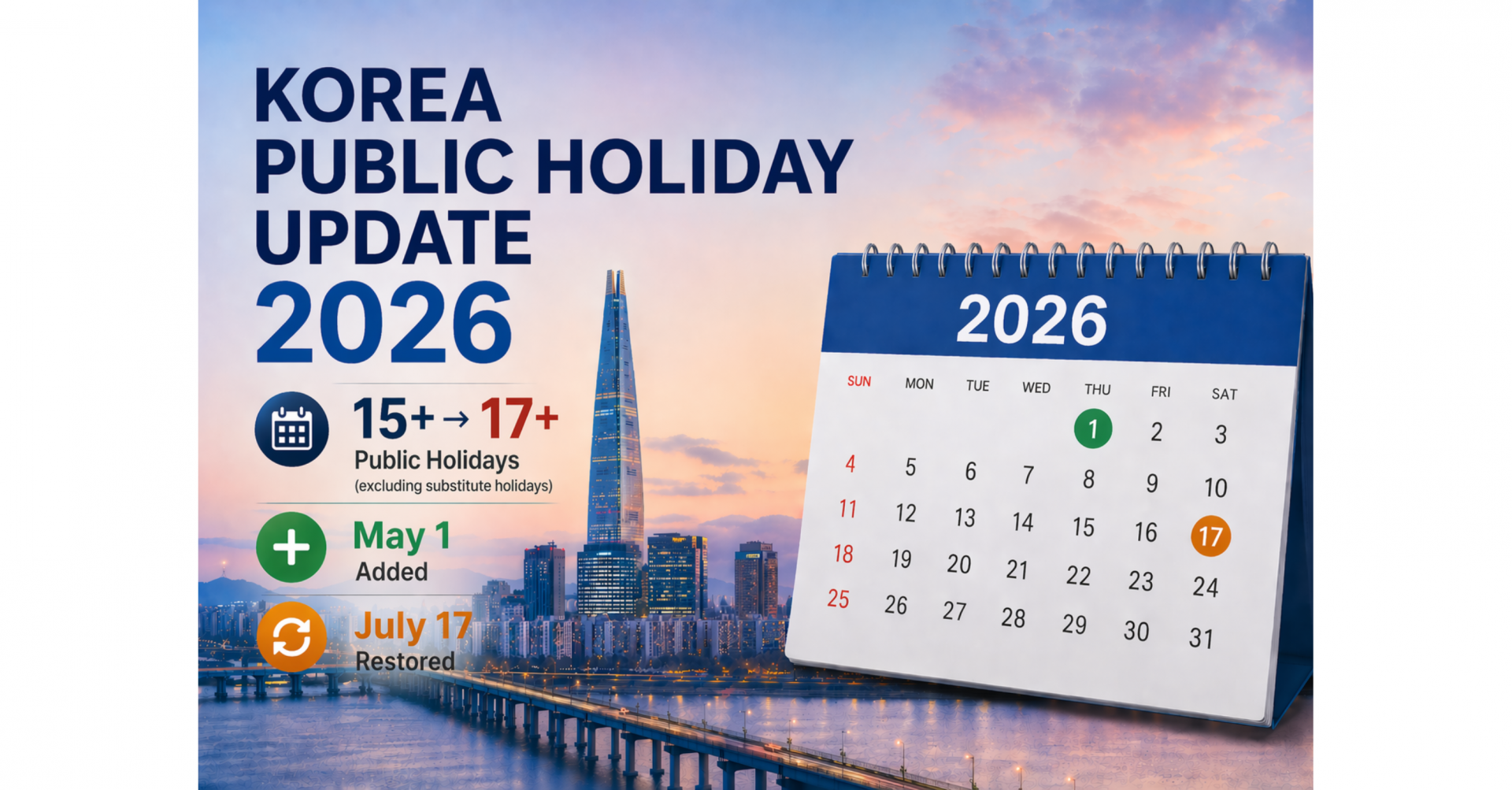
Effective May 1, 2026, under the amendment to the Act on Public Holidays, Labor Day has been added to the list of public holidays in Korea.
Labor Day has long been a statutory paid holiday under the Designation of Labor Day Act, applying to all workplaces with one or more employees. However, it was a paid day off for employees covered under the Labor Standards Act, rather than an official public holiday.
With this amendment, Labor Day is now a public holiday. As a result, government offices and schools will be closed on Labor Day, and public officials will be entitled to this paid holiday as well.
Important Reminder for Employers: No Holiday Substitution for Labor Day
Under the Labor Standards Act, businesses with five or more employees must provide public holidays as paid days off. The Act also allows employers to substitute a different day off in lieu of public holidays, provided there is a written agreement with an employees’ representative.
However, the Ministry of Employment and Labor (MOEL) has recently issued an administrative interpretation stating that Labor Day cannot be substituted for another day as it is specifically designated under its own separate statute. In other words, employees must be given Labor Day off – and if they do work on that day, the employer cannot offer a substitute day off in return; premium holiday pay must be provided instead.
Constitution Day Also Returns as a Public Holiday
As a separate note, Constitution Day (July 17), which had been removed from the list of public holidays, will be reinstated as an official public holiday, effective May 11, 2026.
Korea's Public Holiday Count Just Hit a New High
With these additions, the number of standard public holidays in Korea will increase from 15 to 17 days per year. This figure refers only to the base number of public holidays. The actual total each year will typically exceed 17, as it may also include substitute holidays (granted when a public holiday falls on a weekend or overlaps with another public holiday), election days, and any temporary holidays specially designated by the government.
For more information on public holidays and paid holidays under Korean labor law, please see here.